Trump Cancels Iran Attack: Stunning Move Revealed


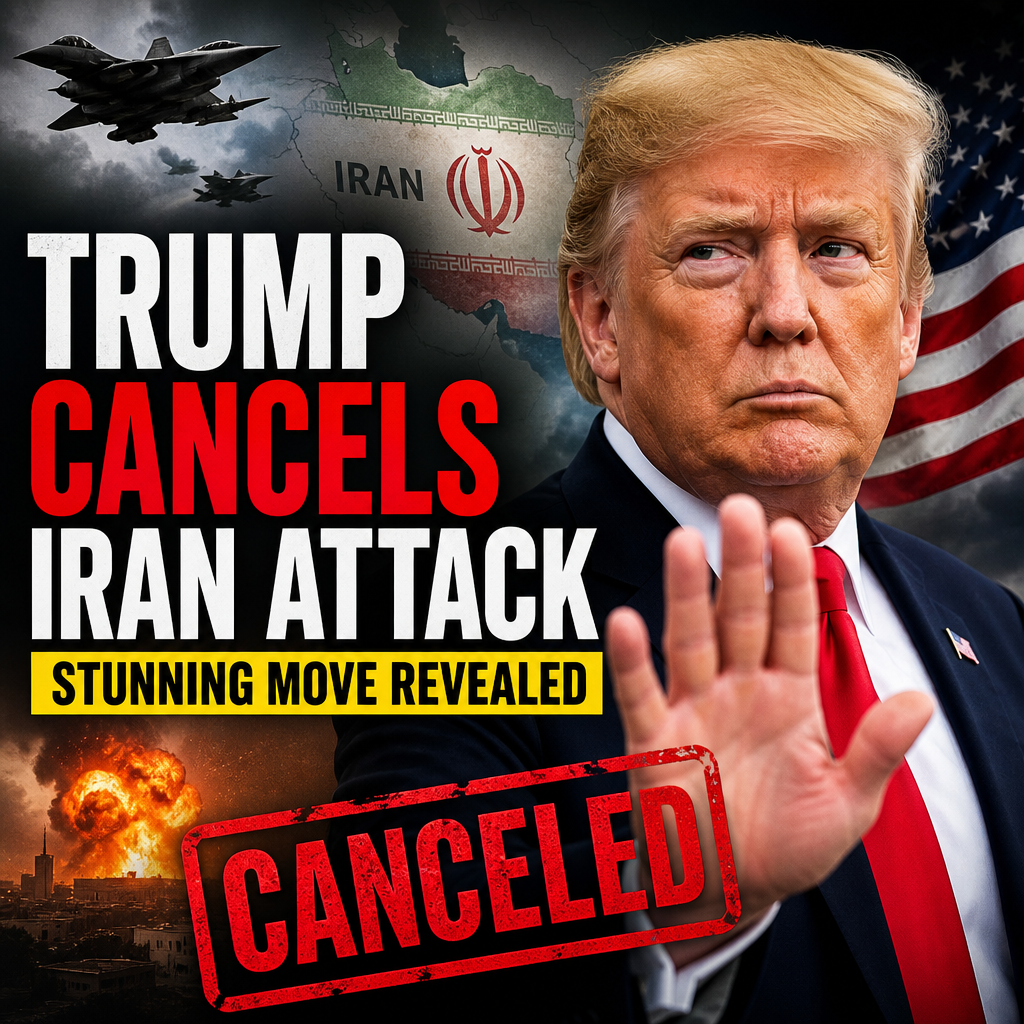
Trump cancels Iran attack, according to multiple reports, and the decision has quickly become another flashpoint in the long-running debate over how far the United States should go when tensions with Tehran spike. What makes the story striking is not only the reported reversal itself, but the broader message it sends: that even in moments of intense military pressure, the White House may still pull back from direct confrontation if the strategic, political, or humanitarian costs look too high.
Trump Cancels Iran Attack: What the reports suggest
The most attention-grabbing version of the story comes from reporting that the strike was considered seriously before being halted. That framing has fueled speculation about whether the move reflected caution, internal disagreement, or a calculated effort to preserve leverage without triggering open war. Regardless of the exact reason, the idea of a planned attack being canceled underlines how volatile U.S.-Iran relations remain.



From a hard-line perspective, canceling an attack could be read as a missed opportunity to weaken a regional adversary. Supporters of a tougher approach often argue that Iran responds only to strength, and that hesitation invites escalation. In that view, restraint may look like weakness, especially if Tehran continues to back proxy groups or challenge U.S. interests across the Middle East.
But another interpretation is more measured. If the attack was called off because the risks outweighed the benefits, that would suggest an administration—or a president—recognizing the difference between deterrence and a war nobody actually wants. Sky News-style coverage of geopolitical crises often emphasizes the practical question: what happens after the first strike? In a region already shaped by retaliation cycles, even a limited military operation can widen fast, drawing in allies, militias, and civilians far beyond the original target.




Why the timing matters in the wider Iran conflict
The timing of any canceled strike matters because U.S.-Iran tensions rarely exist in isolation. They are tied to nuclear negotiations, sanctions, maritime security, and conflicts involving regional partners. Al Jazeera’s reporting on the Middle East frequently highlights the humanitarian and diplomatic dimensions of such standoffs, and that lens is useful here: military threats do not unfold in a vacuum, and each escalation has consequences for ordinary people as well as for policymakers.
That broader context helps explain why some observers may see the cancellation as a sign of caution rather than indecision. The White House may have been weighing several concerns at once:
– the likelihood of Iranian retaliation
– risks to U.S. troops and bases in the region
– possible disruption to oil shipping and energy markets
– the impact on fragile diplomatic channels
– domestic political fallout if the operation went badly
Seen through this lens, canceling the attack could be the more responsible choice, even if it disappoints those seeking immediate punishment or deterrence.
At the same time, critics will ask whether public reports of a planned strike—and then a cancellation—help or hurt U.S. credibility. If allies and adversaries believe Washington is willing to threaten force but unwilling to use it, the United States may appear less predictable. On the other hand, if the administration keeps military options on the table while avoiding a premature attack, that can also be seen as strategic ambiguity.
Competing narratives: strength, restraint, or political theater?
RT’s coverage of U.S. foreign policy often frames Washington’s actions through the lens of strategic inconsistency or overreach, and that perspective tends to resonate with readers skeptical of American intervention abroad. From that viewpoint, the reported cancellation could be interpreted as evidence that even aggressive posturing has limits when the consequences become too severe. It may also be seen as confirmation that military threats are sometimes used for political effect rather than as a path to actual war.
That criticism deserves consideration, but it is not the only plausible reading. In international relations, hesitation is not always hypocrisy. Sometimes it is the result of sober judgment. If a strike risked civilian casualties, failed to achieve a clear objective, or invited a broader conflict, then stepping back may reflect discipline, not confusion.
There is also an internal political angle. Presidents are often pulled between competing pressures: hawks urging force, diplomats urging restraint, and voters reacting differently depending on whether they value toughness or caution. In that sense, the reported cancellation could have been shaped as much by domestic politics as by military calculations.
The challenge for the public is that the available reporting leaves room for competing conclusions. Without full transparency on what was planned, how far preparations advanced, and why the decision changed, certainty is hard to come by. That uncertainty is itself part of the story.
The bigger lesson: avoiding one crisis by inviting another?
If the reported reversal is accurate, the most balanced takeaway is that the administration—or Trump personally—appears to have chosen the lesser immediate risk. That does not mean the underlying conflict has gone away. It only means the threat of direct military escalation was, for now, pulled back from the edge.
Still, the deeper problem remains unresolved. U.S.-Iran relations are so fragile that even a canceled attack can raise tensions, unsettle markets, and shape public expectations of war. A moment like this can deter one crisis while seeding another, especially if neither side has a clear off-ramp.
For now, the story seems to point to a simple but uncomfortable truth: in the standoff between Washington and Tehran, restraint can be as consequential as force. The reported cancellation may have avoided immediate bloodshed, but it also reinforces how close the two countries remain to a miscalculation that neither side fully controls.
In the end, the smartest reading is neither triumphalist nor alarmist. It is cautious. If an attack truly was canceled, that could mean the system worked—leaders paused before crossing a line. But it could also mean the region remains one bad decision away from a larger conflict.